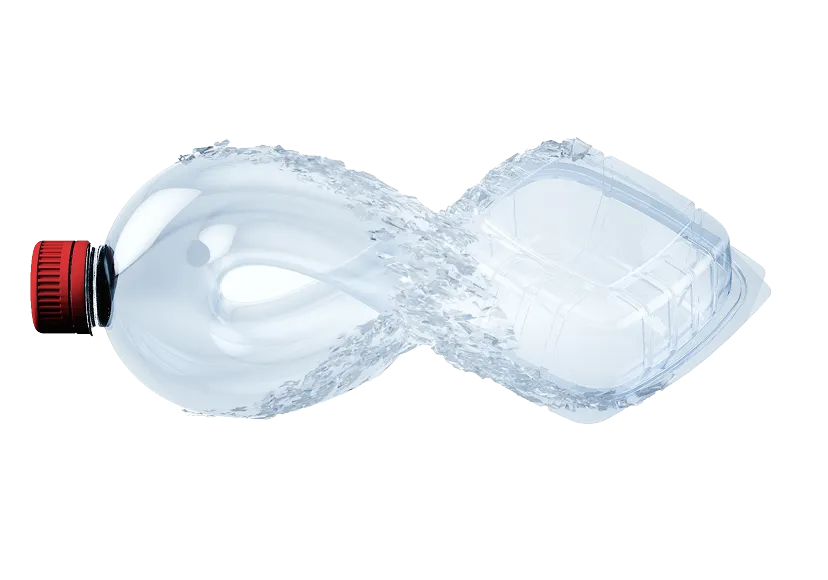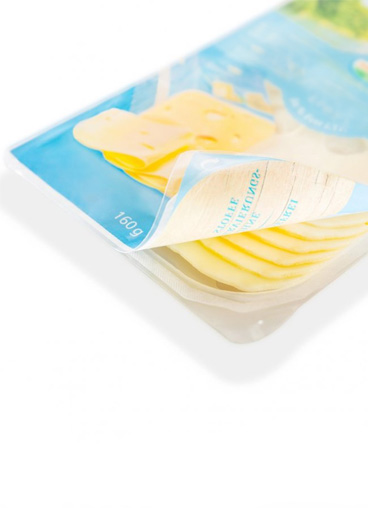
Many of the products we use and benefit from in our everyday life are made from plastics. The insulation of buildings, casing of electronic devices, automotive parts, and of course packaging. The properties of the materials are tailored to each field of applications; therefore, it is only possible to recycle them within the own category.
Keep food packaging in the food packaging recycling loop!
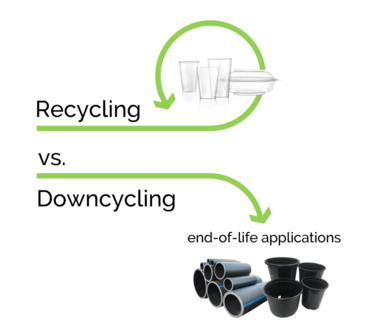
To keep the valuable PET material in the recycling loop, food and beverage packaging must be recycled and used for food or beverage packaging again. If recycled beverage bottles are recycled into a t-shirt or a pipe, the material is forever lost for the food packaging recycling circle.
Why recycled PET?
PET is perfectly suited for mechanical recycling, because its material properties (intrinsic viscosity) can be restored during the process of mechanical recycling. Thanks to the regulations and legislatives (e.g. efsa), PET/rPET is THE circular material for food packaging applications. And on top of that, recycled PET is a circular and sustainable material with a low CO2 footprint.
rPET outperforms all other packaging materials
Life Cycle Analysis (LCA) is an established method to capture a product's impact on the environment during the product’s entire life cycle, from production, to use, disposal, and the recovery of a packaging. In other words: it helps us to assess the direct and indirect effects of packaging solutions on our environment. The Life Cycle Analysis describes the impact quantitatively with the help of metrics, e.g. kilograms CO2-equivalent. Therein lies the strength of the LCA: it allows a comparison of different packaging options.
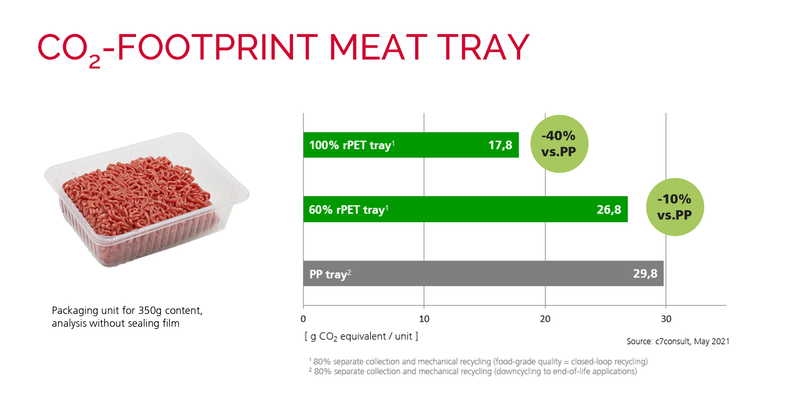
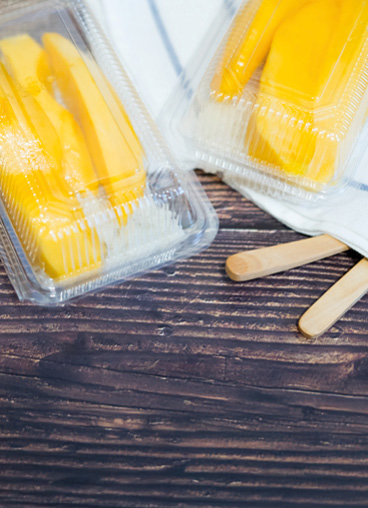
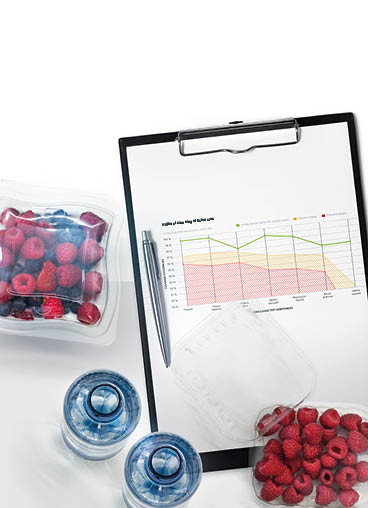
At Starlinger viscotec we have been calling for “100% rPET” for more than a decade. Therefore, we commissioned an independent consultant, to assess different tray packaging solutions in terms of sustainability. The study analyzed mono-material trays, made from 100% rPET and compared the emissions concerning carbon footprint to those of trays made from PP and cardboard/plastic combinations.
The result: the tray made from 100% rPET is the most climate friendly choice!
Plus, in contrast to other plastics, PET has the advantage that collected post-consumer PET trays can again be recycled into new PET trays, which are food-grade and approved for food contact.


We would love to discuss the results of the carbon footprint analysis with you in detail. Please contact us for more information.
Footer